
A quick note before we dive in: Compounders is evolving into something bigger. More on that soon. For now, let’s talk about one of the market’s strangest and most reliable patterns.
QUICK ANSWER (TL;DR)
Since 1950, the S&P 500 has never been lower 12 months after a midterm election, averaging roughly 15% gains during that period. Midterm years themselves tend to be volatile, but uncertainty resolution and political gridlock have historically fueled strong post-election rallies. In 2026, the market has already performed well heading into the election, raising the question of whether the “miracle” arrived early or is still ahead. This isn’t a prediction. It’s a pattern worth watching, especially if volatility creates buying opportunities in good companies.
About the Author
Michael Harvey has spent 30+ years teaching people how experienced investors actually think. He founded Compounders Stock Market Academy to help people understand market patterns and behavior instead of chasing tips or predictions. This piece reflects patterns he’s studied across market cycles, not investment advice.
What If the Market’s Best Indicator Isn’t an Earnings Report?
What if one of Wall Street’s most remarkable market indicators isn’t an earnings report, a Federal Reserve decision, or a sophisticated trading algorithm?
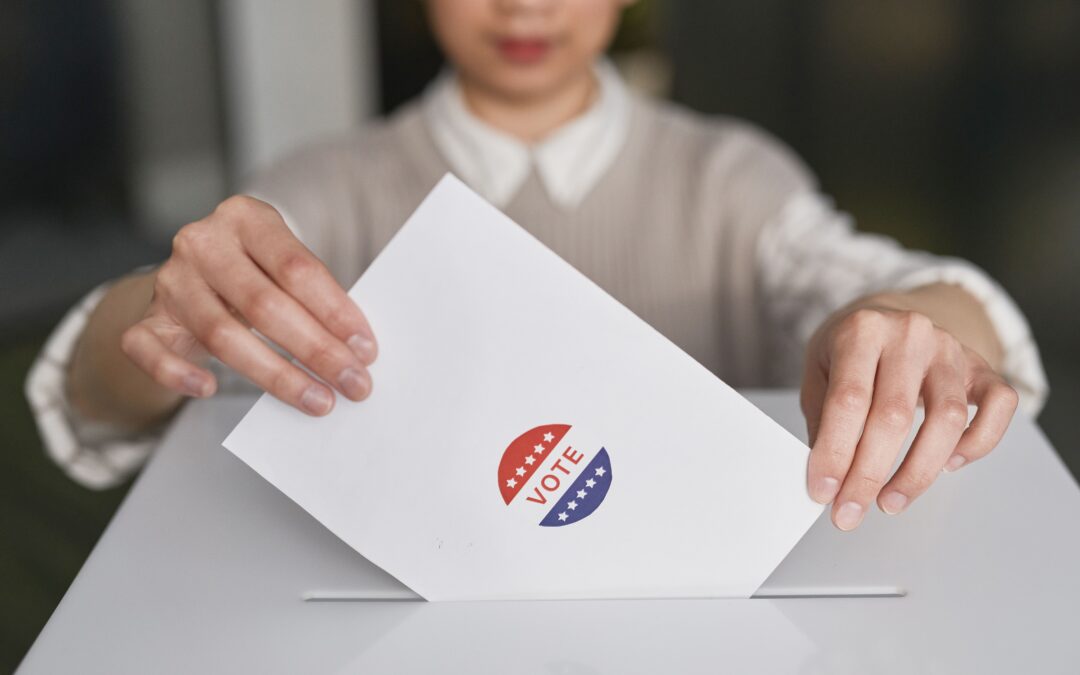
What if it’s simply Election Day?
For decades, the stock market has demonstrated an extraordinary tendency to struggle during midterm-election years, then rally around and after the election.
It’s called The Miraculous Midterms.
And in 2026, the miracle may be approaching again.
The Remarkable History
Here’s the statistic that gets our attention:
Since 1950, the S&P 500 has never been lower 12 months after a midterm election.
According to Capital Group, the average gain during those 12-month periods has been approximately 15%.
Even more interesting: midterm years themselves can be rough. Historically, the market has frequently suffered significant corrections during the months leading up to the election.
Why Does This Happen?
Markets hate uncertainty.
Before a midterm election, investors don’t know which party will control Congress, what legislation will pass, whether taxes or regulations will change, or what Washington might do next.
Then America votes.
Suddenly, one major source of uncertainty disappears.
And midterms frequently produce something Wall Street sometimes loves: gridlock.
Divided government can make major legislative changes more difficult. Whatever your political views, investors often find a government that can’t dramatically change the rules surprisingly comforting.
Why the Fourth Quarter Matters
The timing is particularly intriguing.
Historically, the first three quarters of midterm years have tended to be relatively weak. Then something changes.
The fourth quarter of a midterm year has historically been unusually strong, followed by what has often been an excellent first year of the new congressional cycle.
Hence our name: The Miraculous Midterms.
But there’s an important problem with the 2026 story.
The market forgot to be miserable.
Stocks have already performed strongly this year. Corporate earnings have remained robust, AI investment continues to drive enormous spending, and the S&P 500 has been trading around record territory.
Perhaps the Miraculous Midterms have arrived early.
Or perhaps the best is still ahead.
The Bullish Case: Why It Could Happen Again
There’s a plausible bullish scenario.
Suppose corporate earnings remain strong. Inflation continues moderating. Interest rates eventually decline. The economy avoids recession. And the election removes another layer of uncertainty.
Under those circumstances, investors could enter November facing an attractive combination:
Growing earnings + declining uncertainty + potentially easier monetary policy.
Add the enormous amount of capital continually flowing into retirement accounts and equities, and another post-midterm rally isn’t difficult to imagine.
Importantly, a strong market before the election does not necessarily prevent a strong market afterward.
History doesn’t require stocks to crash first.
The Skeptical Case: Why This Time Could Be Different
There are also excellent reasons for skepticism.
First, stocks aren’t cheap. The S&P 500 is trading at historically elevated valuations, particularly among some of the largest technology companies. A post-election rally beginning from an expensive market is very different from one beginning after a 20% correction.
Second, interest rates remain important. Higher Treasury yields make bonds more competitive with stocks and reduce the present value of future corporate earnings.
Third, investors may already know about the historical midterm pattern. Markets have an annoying habit of anticipating widely expected events.
And finally, history is not a law of physics.
There have only been a limited number of midterm elections since 1950. Inflation, recession, war, an earnings collapse, or another unexpected shock could overwhelm the historical pattern.
The Miraculous Midterms are a tendency, not a guarantee.
What Should Investors Actually Do?
Don’t buy stocks simply because an election is approaching.
Instead, watch for the opportunity that might come before the miracle.
Midterm years have historically experienced substantial volatility. If September or October produces a frightening correction while corporate earnings remain healthy and the economy avoids recession, investors should remember something important:
The decline may not necessarily signal the beginning of a bear market.
It could simply be giving patient investors an opportunity to buy wonderful businesses at better prices.
Why This Matters More Than the Election Itself
At Compounders Stock Market Academy, this is the part of the Miraculous Midterms we find most interesting.
We’re not trying to predict Election Day.
We’re looking for great companies at attractive prices.
If election uncertainty temporarily knocks those prices down, we’ll be watching.
This is the same pattern we teach across every market cycle: volatility creates opportunity for investors who understand value. You don’t need to predict the news. You need to recognize when good businesses get temporarily mispriced because of uncertainty that has nothing to do with their long-term fundamentals.
Because sometimes Wall Street’s darkest moment arrives just before Election Day.
And sometimes, the Midterms really are miraculous.
Frequently Asked Questions
Q: Is the midterm stock market pattern guaranteed to repeat in 2026?
A: No. Historical patterns are observations, not guarantees. Since 1950, the S&P 500 has never been lower 12 months after a midterm election, but this is a tendency based on limited historical data, not a law of market physics.
Q: Why do midterm election years typically see stock market volatility?
A: Markets dislike uncertainty. Before an election, investors don’t know which party will control Congress or what policy changes might follow. Once the election resolves this uncertainty, markets often stabilize and rally, especially if the result produces political gridlock.
Q: What is different about the 2026 midterm cycle?
A: Unlike typical midterm years, the market has already performed strongly in 2026 rather than experiencing the usual pre-election weakness. This raises the question of whether the “miracle” arrived early or whether valuations are simply too elevated for a repeat performance.
Q: Should investors buy stocks because of the midterm election pattern?
A: No. The pattern isn’t a reason to buy on its own. Instead, investors should watch for potential volatility or corrections during election season and evaluate whether strong companies become available at attractive prices, independent of the election itself.
Q: What does “gridlock” mean for the stock market?
A: Gridlock refers to divided government, where no single party controls Congress and the presidency simultaneously. This often makes dramatic policy or regulatory changes harder to pass, which many investors find reassuring because it reduces uncertainty about future business conditions.
The Bigger Lesson
This isn’t really about elections.
It’s about understanding that short-term uncertainty and long-term value are two different things.
Smart investors don’t try to predict political outcomes. They watch for moments when temporary uncertainty creates a gap between price and value, then act with discipline when that gap appears.
That’s not a midterm strategy. That’s an investing strategy that works in every cycle, election or not.
Past performance does not guarantee future results. Historical market patterns are observations, not predictions. This article is for educational purposes only.
Want to learn how to think like an investor instead of trying to predict the news?
That’s what we teach at Compounders Stock Market Academy.